Jawai vs Ranthambore: The Ultimate Rajasthan Safari Comparison (2026 Guide)

Rajasthan is the crown jewel of Indian wildlife tourism, offering two of the most distinct big cat experiences in the world. On one side, you have Ranthambore National Park, the legendary land of the Royal Bengal Tiger. On the other, the rugged, mystical terrain of Jawai, the undisputed Leopard Kingdom of India.
If you are planning a wildlife trip in 2026, the big question is: Which safari is better? While both offer high-octane adventure, the experience, landscape, and sighting probabilities differ vastly. In this comprehensive guide, we break down the Jawai vs Ranthambore debate to help y
ou choose your next wild destination.
1. Wildlife Face-off: Leopards vs. Tigers
Jawai: The High-Probability Zone
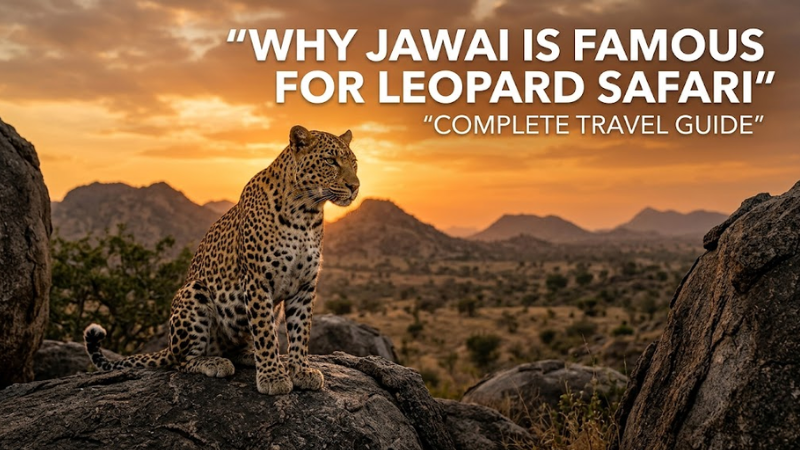
Jawai is arguably the most reliable place in India for big cat sightings. Unlike dense jungles where animals hide behind thick foliage, the Indian Leopards of Jawai live in caves scattered across open granite hills. This "open-air" habitat means the sighting probability often exceeds 90%. In Jawai, it’s not a matter of if you will see a leopard, but how many.
Ranthambore: The Royal Bengal Quest
Ranthambore is synonymous with the Royal Bengal Tiger. It is the place where legends like Machli once roamed. Seeing a tiger in the wild is a spiritual experience, but it is never guaranteed. It requires patience, a great guide, and a bit of luck. While tiger sightings are frequent in premium zones (like Zone 1 to 5), you might have to take multiple safaris to get that perfect "striped" encounter.
Beyond the Big Cats:
Jawai: Home to massive Marsh Crocodiles at the Jawai Dam, Flamingos, Sarus Cranes, and the unique Rabari tribal culture.
Ranthambore: Boasts a diverse ecosystem including Sloth Bears, Striped Hyenas, Caracals, and various species of Deer (Sambar, Chital).
2. The Safari Experience: Flexibility vs. Structure
One of the biggest differentiators between these two destinations is how the safaris are managed.
The Flexible Spirit of Jawai
Jawai does not operate under a strict government "zonal" system. This is a game-changer for wildlife enthusiasts. Since the leopards live on community-owned and private lands, your 4x4 safari gypsy can move freely based on real-time tracking. There are no fixed routes, giving your tracker the freedom to follow fresh pugmarks or alarm calls wherever they lead. This lack of "safari traffic" makes the experience feel exclusive and intimate.
The Regulated Majesty of Ranthambore
Ranthambore is a strictly managed Project Tiger reserve. The park is divided into 10 Safari Zones, and your vehicle is restricted to the zone assigned at the time of booking. You have two options:
Jeep (6-seater): Quicker and quieter, ideal for serious photographers.
Canter (20-seater): A budget-friendly bus-like experience, though it can be noisy.
The rigid timings and routes mean that if a tiger is spotted in Zone 3 and you are in Zone 6, you cannot cross over to see it.
3. Landscape and Photography
The Granite Hills of Jawai
The terrain in Jawai is surreal. Imagine massive, billion-year-old granite boulders balancing on top of each other. For photographers, this is a dream. There are no trees to block your view, and the "Golden Hour" light reflecting off the grey rocks creates a stunning backdrop for leopard portraits. The panoramic view from the top of the hills overlooking the Jawai Bandh is unparalleled.
The Jungle & Heritage of Ranthambore
Ranthambore offers the "classic" Indian jungle vibe—dense deciduous forests, sparkling lakes (like Padam Talao), and ancient ruins. The towering Ranthambore Fort (a UNESCO World Heritage Site) overlooks the park, providing a cinematic, historical atmosphere. It is the best place for "habitat shots" where the tiger is framed by old stone arches or lush greenery.
4. Booking and Planning (2026 Perspective)
How to Reach and Book
Jawai: Primarily accessed via Udaipur (170 km) or Jodhpur (160 km). Booking is straightforward; you usually book directly through luxury resorts like Thour Nature Resorts or local private operators. There is rarely a "sold out" situation for permits.
Ranthambore: Most convenient from Jaipur (130 km) or via train to Sawai Madhopur. Because of its fame, permits for Ranthambore (especially Jeeps) sell out 90 to 120 days in advance on the government portal. Planning a last-minute trip here is difficult.
5. Cost Comparison (Budget 2026)
Feature | Jawai (Leopard) | Ranthambore (Tiger) |
Safari Type | Private 4x4 Gypsy | Shared Canter or Jeep |
Average Safari Cost | ₹4,500 – ₹5,500 (Private) | ₹1,200 (Canter) – ₹5,000 (Jeep) |
Accommodation | Luxury Glamping & Boutique Stays | Wide range (Budget to 7-Star) |
Ease of Sighting | Very High | Moderate |
6. The Verdict: Which One Should You Choose?
Choose Jawai if:
You want a guaranteed sighting of a big cat.
You prefer a quiet, exclusive experience away from hundreds of other tourist vehicles.
You are a wildlife photographer who wants clear, unobstructed angles.
You want to experience the unique culture of the Rabari shepherds.
Choose Ranthambore if:
Seeing a Wild Tiger is a non-negotiable life goal.
You love the traditional jungle atmosphere with lakes, ruins, and dense forests.
You are traveling on a budget (Canters make it very affordable).
You want to combine wildlife with a visit to a massive historic fort.
Conclusion
In 2026, the choice between Jawai and Ranthambore depends on your definition of adventure. Ranthambore is a grand, theatrical experience of the Indian wilderness, while Jawai is an intimate, raw, and highly successful encounter with the "Prince of the Rocks."
If your heart beats for the elusive spots and the silence of the hills, Jawai is calling. If you seek the striped majesty of the jungle, head to Ranthambore. Better yet—since they are only 6-7 hours apart—why not do both?
Which big cat is on your bucket list for 2026? The Leopard or the Tiger? Let us know in the comments below!


Comments